


Mochizuki Chiyome: Japan’s Female Ninja Leader & Kunoichi Legend
- Posted by COOLKATANA
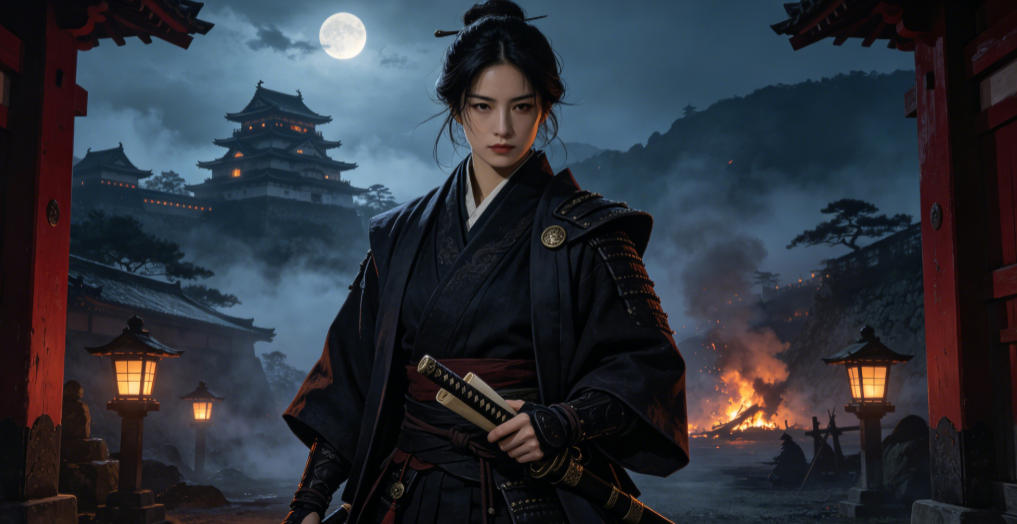
Did Mochizuki Chiyome Really Lead Japan’s First Female Ninja Group?
H1: Was There Really a Female Ninja Leader in History? The Truth Behind Mochizuki Chiyome
During Japan’s Sengoku Period, a time defined by constant warfare, shifting alliances, and political intrigue, ninjas were not only battlefield operatives but also essential instruments of intelligence warfare. Among the many legends of the ninja world, one of the most controversial and fascinating figures is Mochizuki Chiyome, often described as a rare—if not the only—female leader of a ninja organization and a symbolic female ninja / ninja woman icon in Japanese history.
Her story blends historical fragments, folklore, and espionage mythology, making her one of the most mysterious figures in Japan’s ninja culture.
1. Who Was Mochizuki Chiyome? A Mysterious Woman of the Sengoku Era
According to various historical records and oral traditions, Mochizuki Chiyome biography sources trace her origins to the Mochizuki clan in Shinano Province, Japan. This clan was believed to have connections with local samurai forces, Shinto shrine maiden traditions, and early ninja lineages, placing her at the intersection of religion, warfare, and intelligence networks.
During the Sengoku period, regional warlords constantly fought for power. In this environment, intelligence gathering and espionage became decisive factors in warfare. Takeda Shingen was said to require a highly efficient intelligence system to maintain military advantage over rival factions.
It is in this context that Mochizuki Chiyome is believed to have organized one of the earliest female ninja Japan networks.
These women operated as covert agents under deep cover, forming a structured system of Japanese female spy ninja operations. They disguised themselves as shrine maidens, servants, merchants, or entertainers, allowing them to infiltrate castles and political centers unnoticed.
Their missions reflected classic ninja woman history patterns:
- Infiltration of enemy strongholds for intelligence gathering
- Long-term undercover operations in noble households
- Psychological influence on political figures
- Secret communication using coded cultural methods
- Social mobility across different class structures
This system of identity-based espionage helped define early kunoichi meaning, establishing female ninjas as silent but powerful agents in warfare.

2. The Origin and Role of Female Ninjas (Kunoichi)
Within Japanese ninja traditions, kunoichi meaning refers to female ninjas who operated differently from male warriors. In Sengoku period ninja clans, intelligence warfare expanded beyond combat into social infiltration and psychological strategy.
Unlike male ninjas focused on direct infiltration or sabotage, women ninjas in history relied on identity, trust, and relationships.
Their roles included:
- Spy & Intelligence Gathering in political and military environments
- Long-term infiltration into noble households
- Psychological manipulation of key figures
- Secret message transmission through cultural symbols
- Disguise-based mobility across social classes
Because of this, the concept of female assassins Japan history is often discussed alongside kunoichi, though most female ninjas were primarily intelligence agents rather than assassins.
Within this system, Mochizuki Chiyome is often viewed as a symbolic leader who helped organize scattered agents into a structured intelligence network—forming what many describe as a prototype of the real female ninja legend.
3. Did She Really Create a Female Ninja Organization?
✔ Supporting Views
Historical narratives suggest that under Takeda Shingen, Mochizuki Chiyome may have organized 200–300 women into a structured intelligence network resembling early ninja training techniques Japan systems.
These operatives used layered disguises such as:
- Healers and nurses
- Shrine maidens (miko)
- Servants in noble households
- Traveling merchants
- Entertainers in elite social circles
This structure allowed them to operate as a decentralized intelligence system closely associated with Sengoku period ninja clans.

❗ Critical Views
However, scholars question the historical accuracy of female ninja Japan organization narratives due to limited primary sources.
Key arguments include:
- Most records appear in later historical writings
- No confirmed evidence of a unified command structure
- Mochizuki Chiyome may represent a symbolic rather than literal figure
- Female ninja activity may have existed independently, without central leadership
Thus, she is often interpreted as part of the broader real female ninja legend tradition rather than a fully verified historical commander.
Hand Forged Japanese Ninjato Chokuto Straight Blade Sword Folded Steel Square Brass Tsuba

Conclusion
Regardless of historical debate, Mochizuki Chiyome remains one of the most iconic figures in ninja woman history and Japanese espionage mythology. She represents the hidden strategic power of women in warfare and continues to influence global interpretations of female ninja Japan culture.
Her legacy sits at the intersection of history and legend, making her an enduring symbol in studies of kunoichi meaning, Sengoku period ninja clans, and the evolution of ninja intelligence systems.

