


Bastard Sword Explained: History, Design & Medieval Knight Weapon
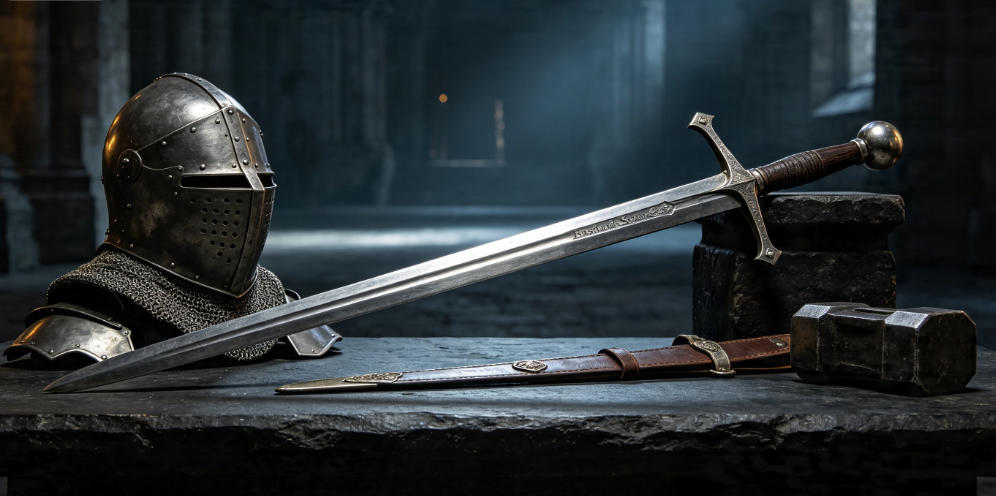
What Is a Bastard Sword? History, Design & Medieval Combat Explained
Throughout the history of European medieval weapons, there is one sword that perfectly combines the flexibility of a single-handed sword with the power and reach of a two-handed blade — the legendary Bastard Sword (Hand-and-a-Half Sword).
As one of the most iconic Medieval Swords, the Bastard Sword was not only an important weapon of the knight era but also a symbol of European swordsmanship, blacksmith craftsmanship, and medieval warrior culture.
Many history enthusiasts and sword collectors search for questions such as:
'What is a Bastard Sword?'
'What is the difference between Bastard Sword and Longsword?'
'Which is stronger, a Bastard Sword or a Greatsword?'
These questions reflect the growing interest in European knight weapons, medieval warfare, and traditional sword craftsmanship. In reality, the Bastard Sword is much more than a weapon. It represents the transformation of European warfare, the evolution of knightly combat techniques, and the development of medieval sword-making technology between the 14th and 16th centuries.
What Is a Bastard Sword? Why Is It Called a Hand-and-a-Half Sword?
A Bastard Sword is a type of medieval longsword that became popular in Europe during the Late Middle Ages. It is also known as a Hand-and-a-Half Sword because its grip length allows it to be used effectively with either one hand or two hands.
Compared with a traditional Arming Sword, the Bastard Sword features:
- A longer blade
- A larger attack range
- Better control and versatility
- Greater adaptability in different combat situations
Compared with the massive Greatsword, however, the Bastard Sword is lighter, faster, and easier to handle.
The word 'Bastard' may sound negative in modern English, but historically it did not mean poor quality or inferior design. Instead, it referred to a sword that combined characteristics from different weapon categories.
The Bastard Sword inherited the convenience of a single-handed sword while incorporating the strength and reach of a two-handed blade, making it one of the most versatile Knight Swords of medieval Europe.

The History of the Bastard Sword: An Evolution of Knight Weapons
The development of the Bastard Sword was closely connected to changes in medieval European warfare.
During the early medieval period, knights mainly relied on one-handed swords combined with shields. This fighting style was highly effective for cavalry charges and close combat.
However, by the 14th century, warfare began to change dramatically. The development of advanced Plate Armor, stronger defensive equipment, and new battlefield tactics created new challenges for traditional swords.
Against heavily armored opponents, simply relying on cutting attacks was no longer enough. Warriors needed a weapon that could provide:
- Greater reach
- Stronger thrusting capability
- Better control
- More flexible fighting options
The Bastard Sword emerged as a solution to these demands.
It could be used:
- On horseback
- In infantry combat
- With a shield
- With two hands for increased power
This versatility made the Bastard Sword one of the most practical European swords of the Late Middle Ages.
The Bastard Sword and Knight Culture: A Symbol of Honor and Identity
In medieval Europe, a sword was far more than a battlefield weapon. It represented a knight’s identity, honor, and social status.
A carefully crafted sword often featured:
- Unique hilt designs
- Decorative crossguards
- Family symbols and engravings
For medieval knights, a sword represented:
- Courage and honor
- Loyalty and responsibility
- Noble status
- Family heritage
During European knight initiation ceremonies, swords were often used as important symbols of loyalty and duty.
The ideals of medieval chivalry — bravery, justice, and honor — became closely connected with the image of the sword.
Therefore, the Bastard Sword was not only a weapon of war but also an important symbol of medieval European culture.
Design Features of the Bastard Sword: Why Was It So Balanced?
The greatest advantage of the Bastard Sword is its balance between power, speed, and control.
Extended Grip Design
The Bastard Sword features a longer grip compared with traditional one-handed swords.
This allows warriors to change their fighting style depending on the situation:
- One-handed use for speed and flexibility
- Two-handed use for greater power and control
This adaptability made the sword suitable for different combat environments.
European Crossguard Design
The classic Crossguard is one of the most recognizable features of European swords.
It served several purposes:
- Protecting the hands
- Preventing enemy blades from sliding downward
- Improving sword control
Many medieval sword guards were also beautifully decorated, reflecting the craftsmanship of skilled blacksmiths.
Pommel Balance System
The Pommel, located at the end of the sword handle, was not only decorative.
It helped:
- Balance the weight of the blade
- Improve handling stability
- Provide a more comfortable grip
Modern collectible Bastard Swords often feature Full Tang construction, where the steel extends through the entire handle, improving durability and structural strength.
Bastard Sword vs Longsword: What Is the Difference?
The Bastard Sword and Longsword are often confused because they share many similarities.
Bastard Sword
Features:
- Medium-length grip
- Can be used with one or two hands
- Focuses on flexibility and adaptability
- Suitable for various combat situations
Longsword
Features:
- Usually has a longer handle
- Primarily designed for two-handed use
- Focuses on strength, control, and technique
- Commonly used in advanced swordsmanship training
Simply put:
The Bastard Sword is a versatile knight weapon, while the Longsword is more specialized for two-handed sword fighting.
One of the most influential European swordsmanship traditions was developed by German fencing master Johannes Liechtenauer, whose Longsword techniques had a lasting impact on European martial arts.
Bastard Sword vs Greatsword: Strength vs Versatility
Many movies and fantasy stories showcase enormous two-handed swords, but historically, the Greatsword and Bastard Sword served different purposes.
Greatsword
A Greatsword typically features:
- A larger blade
- Longer attack range
- Strong battlefield presence
- Higher strength requirements
For example, the German Zweihänder (Two-Handed Sword) used by 16th-century mercenaries was designed for controlling battlefield formations.
Bastard Sword
The Bastard Sword focuses more on balance:
- Easier handling
- Faster movement
- Better personal combat ability
- Greater versatility
If the Greatsword represents raw power, the Bastard Sword represents overall balance and adaptability.

How Was the Bastard Sword Actually Used in Combat?
Movies often portray medieval sword fighting as simple swinging attacks, but real European swordsmanship was far more advanced.
The Bastard Sword could be used for:
- Cutting attacks
- Precision thrusts
- Defensive counterattacks
- Half-swording techniques
One of the most famous techniques was Half-Swording.
When fighting heavily armored opponents, knights would place one hand on the blade and use the sword like a short spear. This improved:
- Thrusting accuracy
- Armor penetration ability
- Control during close combat
This demonstrates that medieval swordsmanship relied not only on strength but also on technique, strategy, and body control.
The Influence of the Bastard Sword on Modern Culture
Although the Bastard Sword originated in medieval Europe, it continues to influence modern entertainment and collecting culture.
It frequently appears in:
- RPG games
- Fantasy novels
- Movies
- Anime-inspired works
- Cosplay collections
- Historical weapon collecting
Many fictional knight swords, legendary weapons, and fantasy blades are inspired by the design of the Bastard Sword.
It represents a classic image:
A knight in armor, holding a powerful sword, fighting for honor and belief.
Modern Bastard Sword Collecting: Combining History and Craftsmanship
Today, collectible Bastard Swords focus heavily on historical accuracy and craftsmanship.
Common features include:
- High carbon steel blades
- Full Tang construction
- Hand-forged craftsmanship
- Historical proportions
- Precise weight balance
For collectors, a high-quality Bastard Sword is not simply a weapon replica. It is a piece of art that represents European knight culture and traditional blacksmith skills.
From Knight Swordsmanship to AI Robotics: The Importance of Precision Control
Although medieval swordsmanship and modern artificial intelligence robotics belong to completely different fields, they share one important concept:
Precise perception and control determine performance.
Today, researchers in artificial intelligence robotics focus on:
best practices for robot navigation with ai
This involves using AI technology to improve robot perception, path planning, and autonomous navigation.
Just as knights needed to understand the weight, direction, and balance of their swords, modern robots also rely on sensors, algorithms, and intelligent systems to understand their environment and perform accurate movements.
Conclusion: Why Is the Bastard Sword a Legendary Medieval Sword?
The Bastard Sword is one of the most important representatives of European sword development.
It combines:
- The flexibility of a single-handed sword
- The power of a Longsword
- The honor of a Knight Sword
- The historical value of a Medieval Sword
It witnessed the transformation of European warfare and demonstrated medieval blacksmiths’ pursuit of functionality, beauty, and balance.
Whether in real history, modern movies, video games, or weapon collections, the Bastard Sword remains one of the most fascinating symbols of the knight era.
It is not just a sword — it is a historical legend representing courage, craftsmanship, honor, and the enduring spirit of medieval warriors.

