


Machete Weapon: History, Uses, Design and Cultural Meaning
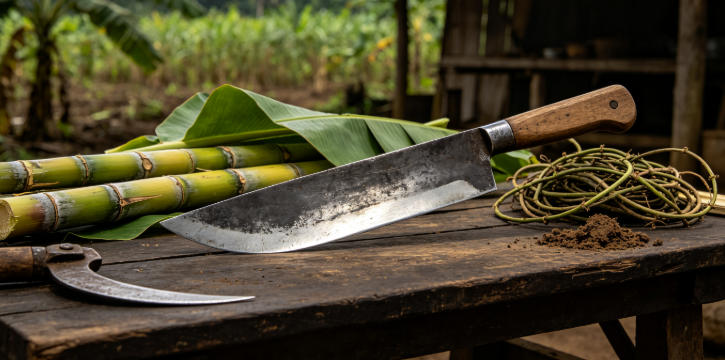
What Is a Machete Weapon and How Did It Evolve from a Tool?
In the history of human tools and bladed weapons, few objects have combined practicality, historical importance, and cultural meaning as clearly as the machete. Today, most people think of the machete as a practical tool used in agriculture, gardening, and outdoor environments. However, from a historical perspective, the concept of the machete weapon is also worth exploring. As societies, conflicts, and cultural environments changed across different regions, a blade originally designed mainly for cutting vegetation and processing crops sometimes became associated with conflict and weapon culture.
So, can a machete be considered a sword? What is the difference between a machete vs sword? And why has an ordinary agricultural tool sometimes been given the identity of a weapon?
These questions involve more than the blade itself. They are also connected to agricultural societies, material technology, regional traditions, and the ways humans adapt everyday tools to changing environments.
From the wide machete blade to its simple and practical handle, from tropical agriculture to modern outdoor activities, the machete demonstrates how a tool can change its role according to social needs. For anyone interested in machete weapon history, sword culture, traditional tools, and the development of bladed objects around the world, the machete remains a particularly unique subject.
What Is a Machete?
A machete is a long-bladed cutting tool that usually features a wide blade and is commonly used for cutting vegetation, clearing brush, harvesting crops, and performing various outdoor tasks. Compared with an ordinary knife, a machete usually has a longer blade. Compared with a traditional sword, however, its design is generally more direct and has historically focused more strongly on practical everyday work.
In many parts of the world, the machete has long been an important agricultural tool. It has been widely used in Latin America, the Caribbean, Africa, and parts of Asia for land clearing, sugarcane harvesting, vegetation management, and other forms of agricultural work.
However, the history of the machete is not limited to agriculture. When social conditions change, an ordinary tool may also take on new roles. This is why the term machete weapon represents more than a simple product category. It reflects the complex historical relationship between tools and weapons.
The Historical Origins of the Machete
The history of the machete is closely connected to the development of agricultural societies. In regions with dense vegetation, people needed a reliable tool capable of cutting branches, leaves, vines, and crops.
Small knives could be inefficient when dealing with thick vegetation, while a larger machete blade provided greater reach and cutting capability. As a result, the machete gradually became an important tool for agricultural workers and people working outdoors.
As different regions developed their own agricultural traditions, machete designs also began to change. Some environments favored longer blades, while others developed wider, shorter, or heavier designs.
These different types of machetes demonstrate the close relationship between tool design and the natural environment.

Machete Design and Structure
A typical machete usually consists of a blade and a handle. Compared with many complex historical swords, its structure is relatively simple, but this simplicity is one of the main reasons the machete has remained popular for so long.
A machete blade is usually wide and designed with enough length for repeated cutting tasks. Different designs may feature different blade tips, blade backs, and cutting-edge shapes depending on their intended agricultural or outdoor applications.
Traditional and modern machetes may be made from carbon steel, high-carbon steel, or other types of steel. The choice of material usually requires a balance between sharpness, durability, toughness, and maintenance requirements.
The handle is equally important. Traditional machetes may use wood, while modern designs often include synthetic materials. A well-designed handle can improve grip stability and comfort, making the tool easier to use for extended periods.
Traditional Uses of the Machete in Agriculture
Agriculture has long been one of the most important areas of machete use.
In farms, forests, and tropical environments, people may use machetes for pruning vegetation, clearing brush, and processing crops. When working with sugarcane, bananas, corn, and many other plants, the wide blade of a machete can provide efficient cutting performance.
For this reason, an agricultural machete is more than an ordinary tool. In many rural communities, it also represents labor, land, and traditional ways of life.
Some machetes develop visible signs of use after years of work. An old blade may therefore carry not only practical value but also memories connected to families, communities, and regional history.
Why Are There Different Types of Machetes?
Although the basic concept of a machete is easy to understand, many different designs have developed around the world.
Regional vegetation, agricultural practices, and cultural traditions can all influence blade length, width, thickness, and overall shape. Some machetes have longer blades suitable for dealing with dense vegetation, while others are wider and emphasize chopping and cutting performance.
Therefore, studying different types of machetes can also provide insight into regional environments and labor traditions.
Latin America, Africa, and the Caribbean have all developed distinctive machete traditions. These differences show that the machete is not a completely fixed tool but rather an adaptable bladed tool that has changed according to local needs.
How Did the Machete Enter Weapon History?
The subject of machete weapon history is one of the more complex areas of machete research.
During periods of social conflict, people have sometimes used tools that were readily available to them for protection or during violent events. Because machetes were common in agricultural regions, they occasionally appeared in wars, uprisings, and social conflicts.
This does not mean that the machete was originally designed as a weapon. On the contrary, its primary historical role has remained closely connected to agriculture and labor.
However, when a tool enters a different social environment, its meaning and use may change. As a result, an agricultural tool may also appear in historical narratives as a machete weapon.
This development reflects an important reality: the boundary between a tool and a weapon can sometimes be shaped by historical circumstances.
The Symbolic Meaning of the Machete Weapon
In some historical contexts, the machete became more than a practical object and gradually developed symbolic meaning.
Because it was traditionally associated with ordinary workers, agriculture, and daily labor, the machete could represent the lives and experiences of common people.
Over time, the image of the machete weapon also appeared in art, literature, and historical narratives.
In these stories, the machete became more than a combination of metal and a handle. It could symbolize endurance, strength, labor, or the relationship between people and the land.
For this reason, the history of the machete cannot be understood simply by studying its blade design. Its cultural meaning in different societies is equally important.
Machete vs Sword: What Is the Difference?
Comparing machete vs sword is one of the most common ways to understand the machete.
A traditional sword is generally designed primarily around combat requirements. Whether it is a European longsword, a Japanese katana, or another historical sword type, its design may consider reach, balance, hand protection, and specific fighting methods.
A machete, on the other hand, was originally designed with practical work in mind.
It needed to cut vegetation, branches, and agricultural materials efficiently. For this reason, its blade is often wider and shaped for repeated chopping and cutting tasks.
However, the two objects also share certain similarities. Both have blades, both can perform cutting movements, and both have developed distinctive forms in different historical cultures.
The main difference lies in their original design purpose. Traditional swords were primarily developed for combat, while the machete was first and foremost a practical tool.
Blade Differences Between a Machete and a Traditional Sword
From the perspective of blade design, machetes and traditional swords have several important differences.
Many swords emphasize balance, speed, control, and precision. Their blade thickness, width, geometry, and center of balance may be carefully designed according to their intended fighting style.
A machete blade, however, is generally optimized for direct cutting and chopping work. A wider blade can improve efficiency when dealing with vegetation, while a relatively simple structure can make the tool suitable for long periods of outdoor use.
Therefore, even when the machete weapon appears in certain historical contexts, it should not automatically be considered identical to a traditional sword.
The Machete in Martial Arts Culture
The machete has also appeared in the martial traditions and training cultures of different regions.
Some forms of training study the historical use of long-bladed tools and focus on body coordination, distance awareness, and basic movement.
From a cultural perspective, machete martial arts demonstrate how everyday tools can sometimes become connected with traditional physical practices.
Modern historical martial arts researchers generally focus on understanding weapon traditions and historical sources rather than treating all bladed systems as identical.
For researchers, the importance of the machete in martial culture lies largely in understanding the relationship between tools, traditions, and historical movement systems.
Traditional Machete Craftsmanship
The process of making a machete can reflect the development of metalworking technology.
Traditional craftsmen must select appropriate materials according to the intended purpose of the blade. Heating, shaping, and heat treatment are important stages in producing a functional blade.
Different machete blades require different balances between hardness and toughness. A blade that is too hard may lose flexibility, while a blade that is too soft may not perform well over long periods of use.
For this reason, material selection and manufacturing techniques must work together.
Traditional craftsmanship can also give individual machetes distinctive details and characteristics.
Today, modern manufacturing provides more consistent production quality, but a traditional hand forged machete can still hold unique cultural and collectible value.
The Development of Modern Machete Design
As material technology has advanced, modern machete designs have also changed significantly.
Manufacturers may use different steels, surface treatments, and handle materials to improve durability and comfort.
Some modern designs place greater emphasis on the ergonomic handle, helping users maintain a more comfortable grip during extended work.
Blade surfaces may also receive treatments designed to improve corrosion resistance and reduce maintenance requirements.
These developments demonstrate that the machete is not simply a traditional tool from the past. It continues to evolve with modern technology.
The Collectible Value of Machetes
For collectors, the value of a machete is not determined only by its appearance.
Different regions, historical periods, and types of machetes may all have distinctive historical backgrounds.
Collectors often consider blade design, manufacturing region, materials, age, condition, and cultural context. Some traditional machetes may also feature distinctive handles, decorative elements, or regional characteristics.
For this reason, a machete collection can provide an interesting way to study agricultural history, local culture, and traditional metalworking.
Every machete with historical significance may tell a story about land, labor, and social development.
How to Preserve and Maintain a Machete
Whether preserved as a collectible or kept as a traditional tool, proper maintenance is important.
For a steel machete blade, keeping the metal dry can help reduce environmental damage and surface deterioration. Different types of steel may also require different maintenance approaches.
The handle should also be inspected regularly. Wooden handles may be affected by changes in humidity, while synthetic materials can show signs of wear over time.
For collectors, proper storage can help preserve both the appearance and the cultural value of the object.

The Machete in Folklore and Culture
In many regions, the machete is more than a tool used for work.
It may appear in folklore, traditional ceremonies, artistic works, and regional cultural traditions.
In some stories, the machete represents courage and endurance. In others, it symbolizes the connection between people and the land.
This cultural meaning makes the idea of the machete weapon much more complex than simply asking whether it is a tool or a weapon.
From a physical perspective, it is a practical object made from metal and a handle. From a cultural perspective, however, it may carry generations of historical memory.
The Machete in Modern Film and Popular Culture
Modern films, literature, video games, and artistic works have further influenced how people view the machete.
In different forms of popular culture, it may be portrayed as a survival tool, a historical object, adventure equipment, or a visually distinctive bladed weapon.
These modern representations may not always reflect historical reality, but they have encouraged more people to become interested in machete history and design.
For film and gaming audiences, the machete often stands out because of its simple, direct, and highly recognizable appearance.
The Practical Uses of Machetes Today
Today, the machete continues to play an important role in many parts of the world.
It is used in agriculture, gardening, land maintenance, and various outdoor environments. Different types of modern machete are designed according to specific environmental and practical needs.
In regions with dense vegetation, the machete remains a highly useful tool.
At the same time, it has become an important object within outdoor culture and traditional tool collecting.
The machete has survived for so long not because of a complicated structure, but because of its remarkable adaptability.
Machete Weapon and Tool Culture
One of the most interesting aspects of studying the machete weapon is understanding how the role of a tool can change.
The same object may have different meanings during different historical periods. For a farmer, it may be a working tool. For a collector, it may be a historical object. For a researcher, it may serve as cultural evidence.
For this reason, the value of a machete cannot always be defined simply by labeling it as either a tool or a weapon.
Its history shows that the objects created by humans can take on new meanings as societies change.
The Future of Machete Development
Future machete design may continue to be influenced by material science and ergonomics.
More durable steels, lighter materials, and increasingly comfortable handle designs may continue to shape the development of modern machetes.
At the same time, the cultural value of traditional machetes is unlikely to disappear.
As more people become interested in traditional craftsmanship, historical tools, and global blade cultures, the machete will continue to provide an important perspective on the history of human labor.
Modern technology may change how machetes are manufactured, but the core value of the machete as a simple, reliable, and highly adaptable tool is likely to remain.
Machete Weapon: From Agricultural Tool to Cultural Symbol
From a working tool used in agricultural environments to the image of the machete weapon in historical narratives, the machete has experienced a unique process of development.
Its history demonstrates that the meaning of a tool does not always remain the same.
As environments, societies, and cultures change, the machete has developed from a simple agricultural tool into an object with historical importance and cultural symbolism.
Whether studying machete history, traditional tools, global weapon culture, or metalworking, the machete provides a distinctive perspective.
Conclusion: Understanding the True Meaning of the Machete Weapon
The story of the machete is about much more than a blade.
From the wide machete blade to its simple and practical handle, from agricultural labor to historical culture, and from traditional tools to modern collecting, the development of the machete records how humans have adapted tools to changing environments.
The concept of the machete weapon is worth studying because it demonstrates that the boundary between a tool and a weapon is not always absolute. Under different historical conditions, the same object can take on different roles and develop new cultural meanings.
Compared with a traditional sword, the machete has a different design purpose and historical background. However, both reflect humanity's long relationship with metalworking, tools, and bladed technology.
Today, whether you are a history enthusiast, traditional tool collector, researcher of sword culture, or simply interested in machete vs sword, exploring the history of the machete can reveal an important truth: behind a seemingly simple machete lies a long story of agriculture, craftsmanship, culture, adaptability, and human history.

